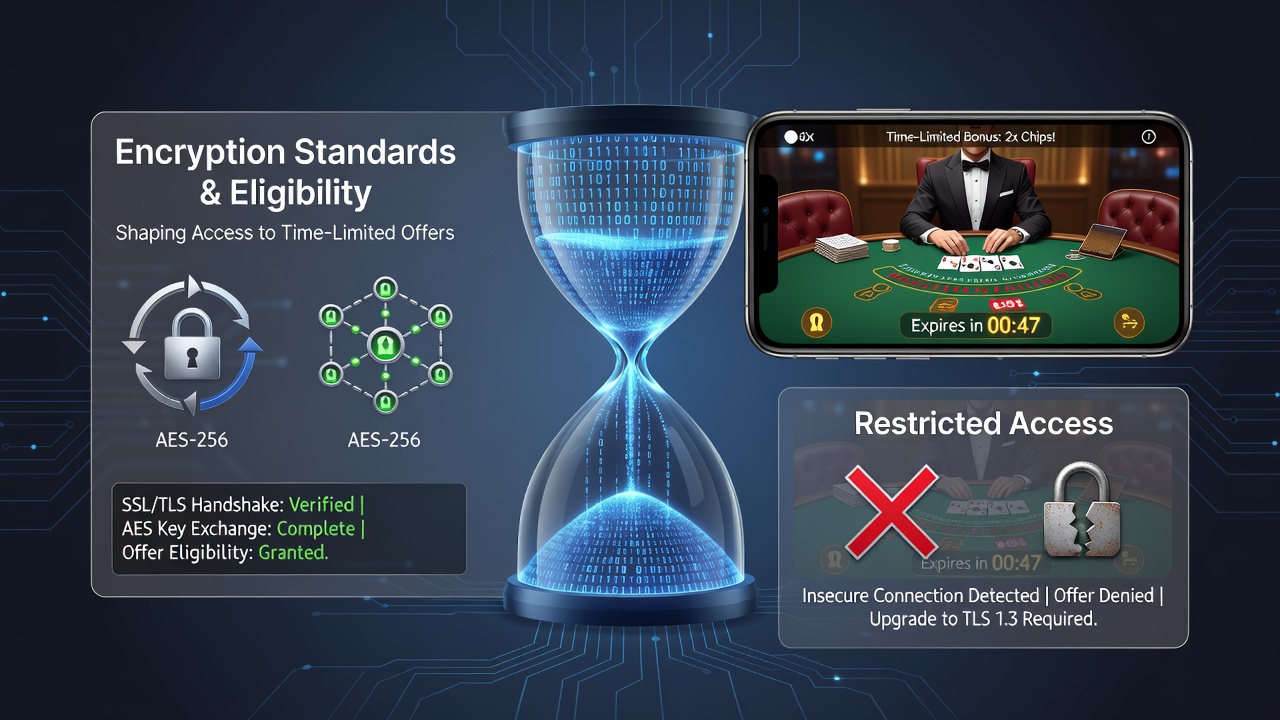
Encryption Standards Determining Access to Time-Bound Promotions in Mobile Interactive Dealer Games
Encryption protocols establish the foundation for secure data transmission in mobile interactive table games, and these same measures directly influence whether players qualify for time-limited promotional offers. Regulatory frameworks in multiple jurisdictions require operators to verify user sessions through robust encryption before any bonus activation occurs, which creates a direct link between security compliance and promotional access.
Core Encryption Mechanisms in Portable Gaming Platforms
Operators deploy standards such as AES-256 for data at rest and TLS 1.3 for real-time communications during live dealer sessions, and these choices affect how quickly systems can authenticate eligibility for temporary incentives. Mobile applications must maintain continuous encrypted channels because any interruption in the handshake process triggers re-verification routines that can delay or block access to offers expiring within hours.
Research from the National Institute of Standards and Technology highlights that updated encryption suites reduce the window for session hijacking attempts, which in turn allows platforms to process promotional claims with higher confidence in user legitimacy. Data from August 2026 shows several North American operators reporting faster approval rates for time-sensitive table game bonuses after migrating to post-quantum resistant algorithms in their mobile infrastructure.
Verification Processes Tied to Security Compliance
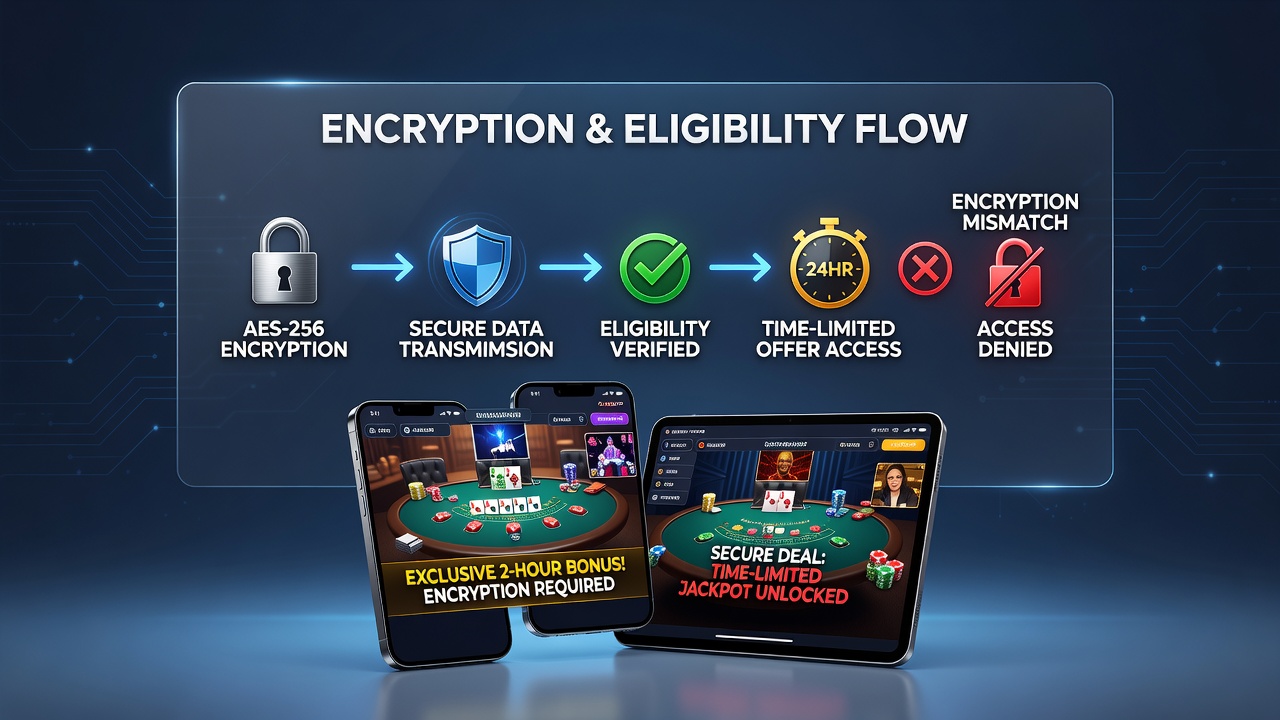
Time-limited offers in interactive dealer environments often require multi-factor checks that rely on encrypted token exchanges between the device and the game server. When encryption standards fall short of required levels, the system flags the session and withholds promotional credits until the connection meets threshold criteria, a process observed across platforms regulated by bodies including the Malta Gaming Authority.
Those who study digital wagering platforms note that handshake failures or outdated cipher suites frequently coincide with rejected bonus redemptions, especially during peak evening hours when mobile traffic spikes. This pattern emerges because promotional engines cross-reference encryption strength as one of several eligibility gates before unlocking limited-time rewards.
Regional Regulatory Influences on Mobile Offer Eligibility
Canadian provincial regulators have incorporated encryption benchmarks into their licensing conditions for mobile table game offerings, and operators must demonstrate that promotional systems only activate when sessions meet those benchmarks. Similar requirements appear in guidance issued by the Nevada Gaming Control Board, where compliance audits examine whether encryption directly supports the integrity of time-bound incentive distributions.
Industry reports from the European Gaming and Betting Association indicate that platforms enforcing stricter encryption protocols experience fewer instances of fraudulent claim attempts on mobile live games. This reduction occurs because encrypted session logs provide clearer audit trails that regulators accept as evidence of legitimate player activity during promotional windows.
Technical Implementation Challenges on Handheld Devices
Mobile hardware variations create additional layers of complexity when encryption standards must align with promotional eligibility rules. Devices running older operating systems sometimes struggle to support the latest TLS versions, resulting in automatic disqualification from offers that demand current security postures for activation.
Observers note that game developers address this by embedding fallback encryption modules that maintain compliance without forcing players to update their entire device software. Yet the process still requires seamless integration between the encryption layer and the promotional backend, since any mismatch halts the offer redemption flow mid-session.
Impact on Player Session Continuity and Offer Timing
Live table games on mobile devices depend on uninterrupted encrypted streams, and any re-negotiation of security parameters can pause gameplay long enough to miss narrow promotional deadlines. Operators have responded by pre-validating device encryption capabilities during initial login, which allows eligible users to claim time-limited incentives without mid-game interruptions.
Figures released in mid-2026 reveal that platforms incorporating device-side encryption checks at login saw measurable increases in successful redemptions of table game bonuses compared with those relying solely on server-side verification. The difference stems from reduced latency when the system already confirms security compliance before the offer clock begins.
Conclusion
Encryption standards function as gatekeepers that shape which mobile sessions gain access to time-limited offers in interactive table games. Regulatory bodies across regions continue to tie security requirements directly to promotional integrity, while operators refine their technical implementations to balance compliance with user access. As mobile gaming infrastructure evolves through 2026 and beyond, the relationship between encryption strength and eligibility criteria remains a central factor in how these systems operate.