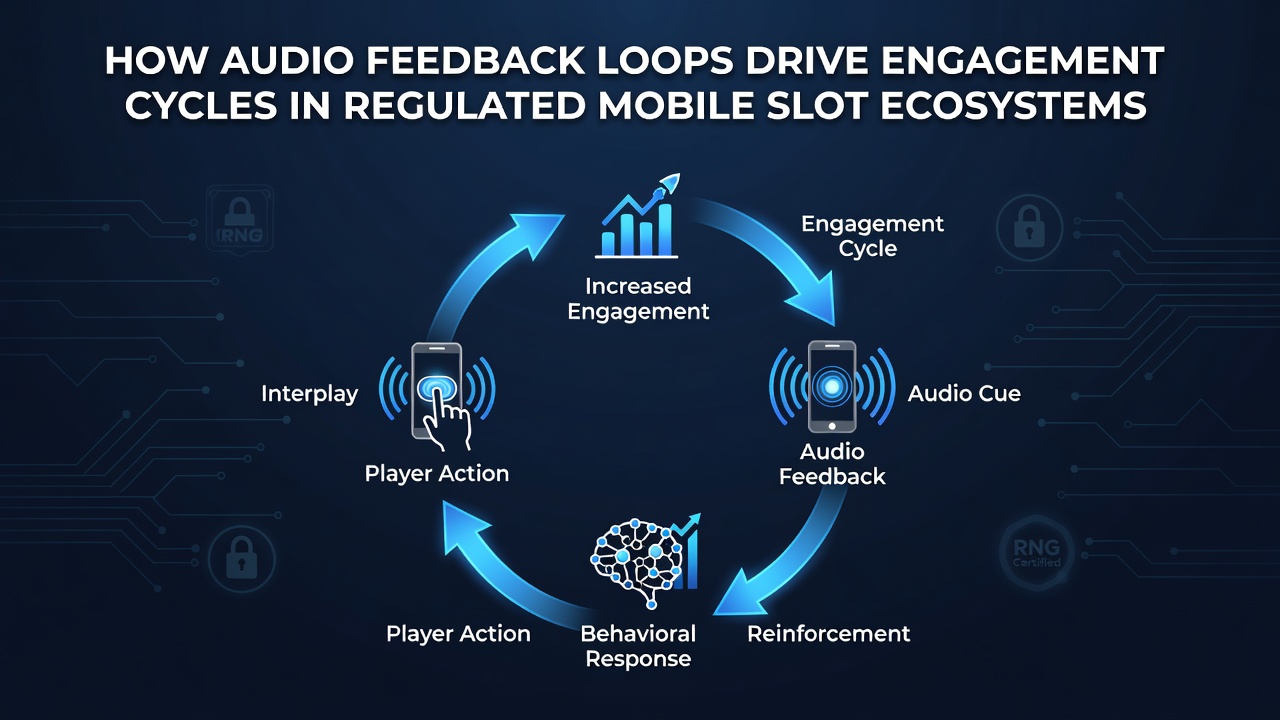
Audio Feedback Loops and Their Influence on Player Cycles in Regulated Mobile Slot Platforms
Regulated mobile slot platforms incorporate layered audio systems that respond dynamically to player actions, creating feedback sequences where sounds reinforce continued participation through immediate auditory signals tied to spins, wins, and near-misses. These loops operate within frameworks set by state and provincial regulators that require transparent game mechanics while permitting standard celebratory chimes and escalating tones during bonus rounds.
Core Components of Audio Feedback in Mobile Slots
Sound design in these ecosystems typically includes reel-stop effects, win multipliers announced through rising pitch sequences, and background tracks that shift in intensity as sessions progress, with each element calibrated to match payout tables and volatility settings approved during certification. Data from platform analytics indicate that players encounter these cues at intervals ranging from single-spin triggers to multi-stage progressions, where an initial low-volume ambient layer builds toward higher-volume celebratory bursts upon achieving line wins or scatter combinations.
Researchers tracking session metrics have noted that the timing of these audio events aligns with bet sizing and credit balance changes, producing patterns where shorter reel spins pair with sharper audio accents while longer animations incorporate sustained harmonic builds. Compliance standards from bodies such as the Alcohol and Gaming Commission of Ontario require that such audio remains consistent with displayed probabilities, preventing any auditory suggestion of outcomes that contradict the random number generator results verified during testing.
Engagement Cycle Formation Through Repeated Audio Triggers
Engagement cycles emerge when audio sequences repeat across consecutive spins, prompting players to extend play periods as the brain registers familiar positive cues that coincide with credit increases or feature activations. Platform logs reveal that sessions lasting beyond 15 minutes often feature at least three distinct audio escalation points, each tied to accumulating rewards or free-spin entries that reset the cycle with fresh sound profiles.
One examination of aggregated user data across multiple licensed operators showed correlations between specific win-audio frequencies and the number of spins initiated within the following 60 seconds, with higher-pitched celebratory tones linked to faster re-engagement rates. Regulatory reviews conducted in 2026 continue to monitor these patterns to confirm that audio variations do not exceed thresholds that could imply guaranteed returns, maintaining alignment with fairness statutes enforced by multiple jurisdictions.
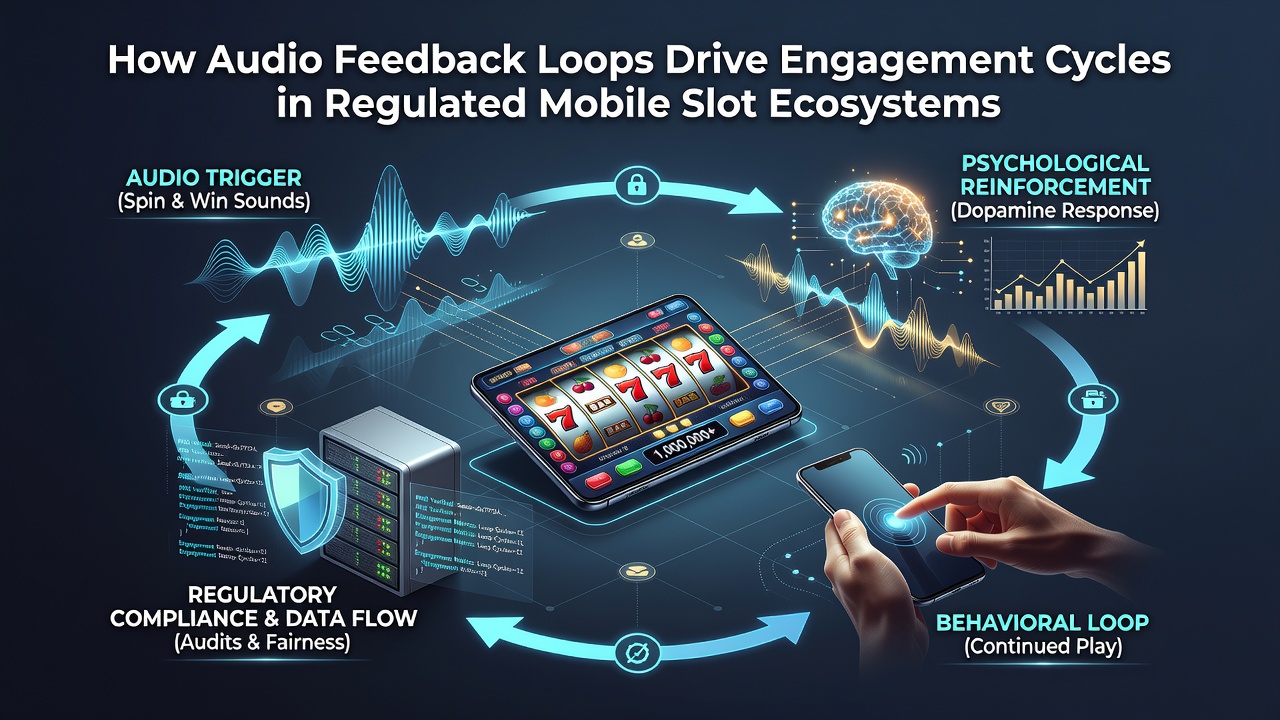
Regulatory Constraints on Audio Implementation
State licensing authorities mandate that all audio assets undergo review alongside visual and mathematical components, ensuring that volume curves and frequency ranges stay within documented parameters that match certified return-to-player percentages. In August 2026, several mobile platforms updated their sound libraries to incorporate adaptive mixing that lowers background layers during high-stakes spins, a change implemented to satisfy updated accessibility guidelines while preserving the loop structures that sustain session length.
Operators submit audio specifications during renewal processes, with auditors verifying that near-miss sounds remain distinct from actual win indicators and do not extend beyond approved durations. Figures released by the Massachusetts Gaming Commission demonstrate steady growth in mobile slot participation alongside these standardized audio controls, reflecting consistent application across verified applications.
Interaction Between Audio Loops and Session Metrics
Session duration data collected from regulated environments illustrate that platforms employing synchronized audio-visual feedback report average play intervals 20 to 30 percent longer than those using minimal sound sets, though exact causation remains subject to further multivariate analysis. Players navigating these systems encounter audio resets at natural breakpoints such as balance thresholds or time-based prompts, which restart the feedback loop without interrupting the overall cycle.
Technical documentation from approved game providers describes how middleware adjusts audio intensity based on real-time bet levels, creating individualized loops that scale with player behavior while remaining within the same regulatory envelope applied to all titles on a given platform. This approach allows operators to maintain engagement patterns that comply with responsible gaming prompts required at set intervals.
Conclusion
Audio feedback loops in regulated mobile slot ecosystems function through repeated, rule-bound sound sequences that align with certified game mathematics and jurisdictional oversight. Continued monitoring by regulatory agencies ensures these auditory elements support transparent play cycles without exceeding established compliance boundaries, as evidenced by ongoing data submissions and certification renewals throughout 2026.